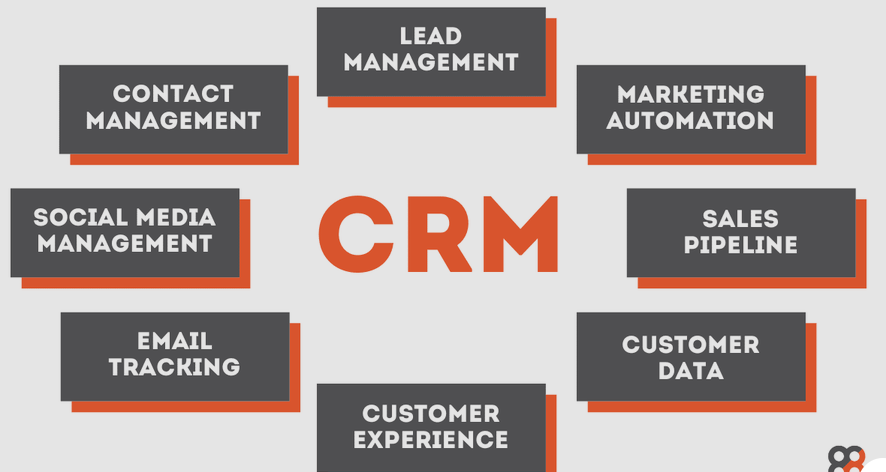
Customer Relationship Management (CRM) software has become one of the most important investments for businesses of all sizes. Whether you run a small startup, an online store, a marketing agency, a real estate company, or a large enterprise, managing customer relationships efficiently can directly impact your revenue, productivity, and long-term growth.
In today’s competitive business environment, customers expect personalized communication, faster responses, and seamless service. Businesses that fail to meet these expectations often lose valuable customers to competitors. This is where CRM software plays a vital role.
A CRM system centralizes customer information, tracks interactions, automates repetitive tasks, improves sales performance, and helps businesses build stronger relationships with clients.
However, choosing the right CRM isn’t as simple as selecting the most popular platform. Hundreds of CRM solutions exist, each offering different features, pricing structures, integrations, and customization options. Buying the wrong CRM can result in wasted money, frustrated employees, and poor adoption rates.
This comprehensive CRM buying guide explains everything you need to know before purchasing CRM software, including essential features, pricing models, key considerations, common mistakes, and how to choose the best CRM for your business.
What Is CRM Software?
CRM (Customer Relationship Management) software is a digital platform designed to help businesses organize, manage, and improve relationships with current and potential customers.
Instead of keeping customer information in spreadsheets, notebooks, or scattered emails, CRM software stores everything in one centralized location.
Typical CRM data includes:
- Customer names
- Contact information
- Purchase history
- Email conversations
- Phone call records
- Meeting notes
- Sales opportunities
- Support tickets
- Marketing interactions
- Follow-up reminders
The primary goal is to help businesses deliver better customer experiences while increasing sales and operational efficiency.
Why Every Business Needs CRM Software
Businesses lose customers for many reasons:
- Forgotten follow-ups
- Poor communication
- Disorganized customer records
- Slow response times
- Lack of sales tracking
- Missed opportunities
CRM software solves these problems by organizing customer information and automating daily workflows.
Benefits include:
- Better customer relationships
- Higher sales conversions
- Faster customer support
- Improved employee productivity
- Better marketing campaigns
- Increased customer retention
- More accurate sales forecasting
Companies that manage customer relationships effectively often experience higher customer satisfaction and improved profitability.
Types of CRM Software
Understanding CRM categories helps narrow your buying decision.
Operational CRM
Operational CRM focuses on daily business operations.
Features include:
- Sales automation
- Lead management
- Contact management
- Email automation
- Customer service tools
Ideal for businesses looking to improve everyday workflows.
Analytical CRM
Analytical CRM focuses on data analysis.
Features include:
- Customer behavior reports
- Sales analytics
- Revenue forecasting
- Marketing performance
- Customer segmentation
Best suited for data-driven businesses.
Collaborative CRM
Collaborative CRM helps teams communicate effectively.
It allows:
- Sales teams
- Marketing teams
- Customer support departments
to share customer information in real time.
This improves customer experiences by ensuring every department stays informed.
Industry-Specific CRM
Some CRM platforms are designed specifically for industries such as:
- Real estate
- Healthcare
- Insurance
- Legal firms
- Manufacturing
- Construction
- Financial services
- Automotive
- Education
These systems include specialized workflows and templates.
Essential CRM Features to Look For
Not every CRM offers the same functionality. Before buying, ensure the software includes the features your business actually needs.
Contact Management
This is the foundation of every CRM.
It stores:
- Customer profiles
- Contact details
- Communication history
- Notes
- Files
- Company information
Everything remains organized in one place.
Lead Management
Lead management helps businesses:
- Capture leads
- Qualify prospects
- Assign leads
- Track follow-ups
- Monitor conversions
A good CRM prevents potential customers from slipping through the cracks.
Sales Pipeline Management
Pipeline management gives sales teams a visual overview of every deal.
Typical stages include:
- New Lead
- Qualified Lead
- Proposal
- Negotiation
- Won
- Lost
Managers can instantly identify bottlenecks.
Workflow Automation
Automation reduces manual work.
Examples include:
- Automatic follow-up emails
- Task reminders
- Lead assignments
- Status updates
- Customer notifications
- Approval workflows
Automation saves time and minimizes human error.
Email Integration
Your CRM should integrate with major email platforms.
Benefits include:
- Sending emails directly from CRM
- Tracking email opens
- Recording conversations
- Scheduling follow-ups
- Creating email templates
Calendar Integration
Calendar syncing ensures meetings and appointments stay organized.
Compatible calendars often include:
- Google Calendar
- Microsoft Outlook
- Apple Calendar
Task Management
Task management keeps employees organized.
Features include:
- To-do lists
- Reminders
- Deadlines
- Team assignments
- Progress tracking
Reporting and Analytics
Data-driven decisions require accurate reporting.
Look for dashboards covering:
- Revenue
- Sales performance
- Customer acquisition
- Marketing ROI
- Team productivity
- Lead conversion rates
Custom reporting is even more valuable.
Mobile Access
Modern businesses need CRM access anywhere.
A mobile CRM allows users to:
- Update customer records
- Make calls
- Send emails
- Schedule meetings
- Access contacts
from smartphones or tablets.
Document Management
Many CRMs allow users to store:
- Contracts
- Invoices
- Quotes
- Proposals
- Agreements
- Customer files
Everything stays connected to customer profiles.
Customer Support Tools
Some CRMs include customer service features like:
- Help desk
- Live chat
- Ticket management
- Knowledge base
- Customer portals
These improve customer satisfaction.
Marketing Automation
Marketing tools may include:
- Email campaigns
- Landing pages
- Lead scoring
- Campaign analytics
- Social media integration
- SMS marketing
These features help nurture leads automatically.
Artificial Intelligence (AI)
Modern CRM software increasingly includes AI features.
Examples include:
- Sales predictions
- Smart recommendations
- Email writing assistance
- Lead scoring
- Chatbots
- Conversation summaries
- Automated data entry
AI can significantly improve productivity.
Cloud CRM vs On-Premise CRM
Choosing the deployment model is another important decision.
Cloud CRM
Hosted online by the software provider.
Advantages:
- Lower upfront costs
- Automatic updates
- Remote access
- Easy setup
- Scalable
- No server maintenance
Disadvantages:
- Monthly subscription fees
- Internet dependency
Cloud CRM is ideal for most businesses today.
On-Premise CRM
Installed on company-owned servers.
Advantages:
- Greater control
- Custom security
- Full ownership
- Offline capabilities
Disadvantages:
- High installation costs
- Maintenance responsibilities
- IT staff required
- Expensive upgrades
Best for organizations with strict compliance requirements.
CRM Pricing Models
Understanding pricing helps avoid unexpected costs.
Free CRM
Best for:
- Freelancers
- Startups
- Small businesses
Pros:
- No monthly fees
- Basic features
- Easy to start
Cons:
- User limits
- Storage restrictions
- Limited automation
- Fewer integrations
Subscription-Based CRM
Most CRM providers charge monthly or annual subscriptions.
Pricing often depends on:
- Number of users
- Features
- Storage
- Automation
- Support level
Typical price ranges include:
- Basic plans: $10–$30 per user/month
- Professional plans: $40–$100 per user/month
- Enterprise plans: $150+ per user/month
Custom Enterprise Pricing
Large organizations often negotiate custom pricing based on:
- Number of employees
- Storage requirements
- Security needs
- API usage
- Custom development
- Training services
Hidden CRM Costs
Many businesses overlook additional expenses.
Potential hidden costs include:
- Implementation
- Data migration
- Employee training
- Premium integrations
- API usage
- Custom development
- Technical support
- Additional storage
- Advanced reports
- Third-party apps
Always calculate the total cost of ownership before buying.
Important Questions Before Buying CRM Software
Ask yourself the following questions:
- What problems are we trying to solve?
- How many employees will use the CRM?
- What’s our budget?
- Do we need automation?
- Will we scale in the future?
- Do we require mobile access?
- Which software must integrate with the CRM?
- How much customization is necessary?
- Do we need customer support features?
- Who will manage the CRM internally?
Answering these questions narrows your options significantly.
CRM Integration Capabilities
CRM software becomes much more valuable when integrated with existing business tools.
Look for integrations with:
- Email platforms
- Accounting software
- Marketing platforms
- Social media
- Live chat
- Payment gateways
- E-commerce platforms
- ERP systems
- Video conferencing
- Project management software
Strong integration reduces manual data entry.
CRM Security Features
Customer information is valuable and must be protected.
Important security features include:
- Data encryption
- Multi-factor authentication
- User permissions
- Role-based access
- Audit logs
- Automatic backups
- Single Sign-On (SSO)
- Compliance certifications
- Secure cloud hosting
Security should never be compromised.
Scalability Matters
Many businesses outgrow their first CRM.
Choose software that can grow with your company by supporting:
- More users
- More customers
- Additional storage
- Advanced automation
- Custom workflows
- Multiple departments
- International operations
Scalable CRM software reduces future migration headaches.
Ease of Use
A CRM filled with advanced features is useless if employees refuse to use it.
Evaluate:
- User interface
- Navigation
- Dashboard design
- Search functionality
- Mobile experience
- Learning curve
Most providers offer free trials or demos. Test the software with real users before making a purchase.
Customer Support and Training
Even excellent software occasionally requires assistance.
Look for providers offering:
- Live chat
- Phone support
- Email support
- Knowledge base
- Video tutorials
- Community forums
- Onboarding sessions
- Dedicated account managers
Reliable support reduces downtime and speeds up adoption.
Common CRM Buying Mistakes
Avoid these frequent mistakes:
Buying Based Only on Price
The cheapest CRM may lack essential features, while the most expensive one may include tools you’ll never use.
Ignoring User Experience
Complex software often leads to poor employee adoption.
Overlooking Integrations
Ensure your CRM works seamlessly with your existing business systems.
Choosing Too Many Features
Buying unnecessary features increases costs and complexity.
Not Planning for Growth
Select software that supports future expansion.
Skipping Employee Training
Proper training ensures employees use the CRM effectively.
Ignoring Security
Weak security can expose sensitive customer data and damage your business reputation.
CRM Implementation Tips
A successful CRM purchase doesn’t end with selecting the software.
Implementation steps include:
- Define business goals.
- Clean existing customer data.
- Import data carefully.
- Configure workflows.
- Train employees.
- Test all integrations.
- Launch gradually.
- Monitor user adoption.
- Collect employee feedback.
- Continuously optimize the system.
Proper implementation greatly increases return on investment.
How to Compare Different CRM Solutions
When evaluating CRM platforms, compare them using the following criteria:
| Feature | Importance |
|---|---|
| Contact Management | High |
| Sales Pipeline | High |
| Automation | High |
| Integrations | High |
| Mobile App | High |
| Reporting | High |
| AI Features | Medium |
| Customer Support | High |
| Security | High |
| Pricing | High |
| Ease of Use | High |
| Customization | Medium |
| Scalability | High |
Creating a comparison checklist helps simplify your final decision.
Which CRM Is Right for Your Business?
Different businesses have different priorities.
Small Businesses
Focus on:
- Affordable pricing
- Easy setup
- Basic automation
- Contact management
- Email integration
Growing Companies
Look for:
- Advanced reporting
- Workflow automation
- Marketing tools
- Team collaboration
- Scalable pricing
Large Enterprises
Prioritize:
- Enterprise security
- Custom workflows
- API access
- AI capabilities
- Advanced analytics
- Multi-department management
The best CRM is the one that aligns with your business goals, budget, and operational requirements rather than simply offering the longest feature list.
Final Thoughts
Choosing the right CRM software is a strategic decision that can influence every aspect of your business, from sales and marketing to customer support and long-term growth. While there is no one-size-fits-all solution, the best CRM is the one that fits your workflows, scales with your business, and empowers your team to work more efficiently.
Before making a purchase, clearly define your business objectives, identify the features you truly need, compare pricing plans carefully, and take advantage of free trials or demonstrations. Consider not only the upfront subscription cost but also implementation, training, integrations, and future scalability.
A well-chosen CRM can help you build stronger customer relationships, increase sales, improve collaboration, automate repetitive tasks, and gain valuable insights through data and analytics. By investing time in the selection process today, you’ll be better positioned to achieve sustainable growth and maximize your return on investment for years to come.