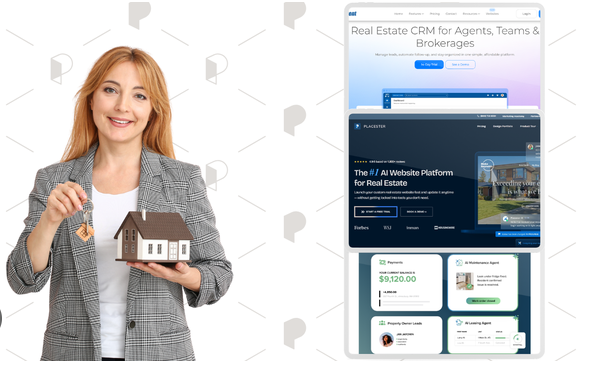
The real estate industry has become more competitive than ever before. Buyers and sellers expect faster responses, personalized communication, virtual property tours, automated follow-ups, and seamless transactions. For agents and brokers, managing hundreds of leads, listings, appointments, and clients manually is no longer practical. This is where Real Estate CRM (Customer Relationship Management) software becomes an essential business tool.
A modern real estate CRM is much more than a contact database. It serves as the central hub for managing every stage of the customer journey—from capturing online leads and nurturing prospects to closing deals and maintaining long-term relationships for referrals and repeat business.
In 2026, artificial intelligence, workflow automation, predictive analytics, and omnichannel communication have transformed CRM platforms into intelligent business assistants. Whether you’re an independent real estate agent, a growing team, or a large brokerage, selecting the right CRM can significantly improve productivity and revenue.
This comprehensive guide explores the best real estate CRM software for agents and brokers in 2026, highlighting their features, pricing, advantages, disadvantages, and ideal use cases.
Why Real Estate Professionals Need CRM Software
Successful real estate businesses rely heavily on relationships and consistent follow-up. Since purchasing property is a long decision-making process, agents often communicate with clients over weeks or months.
Without a CRM, opportunities are easily lost due to forgotten follow-ups, scattered contact information, and inconsistent communication.
A specialized real estate CRM helps by:
- Capturing leads automatically
- Organizing buyer and seller information
- Tracking every interaction
- Scheduling appointments
- Automating email and SMS campaigns
- Managing listings
- Monitoring deals
- Generating reports
- Improving customer satisfaction
Instead of spending hours on administrative work, agents can focus on building relationships and closing more transactions.
Key Features Every Real Estate CRM Should Offer
Before choosing any CRM, understand which features matter most.
Lead Management
The CRM should automatically collect leads from:
- Property websites
- Landing pages
- Facebook Ads
- Google Ads
- Zillow
- Realtor.com
- MLS integrations
- Email campaigns
Every inquiry should immediately appear inside the CRM without manual entry.
Contact Management
Store complete customer information including:
- Phone numbers
- Email addresses
- Property preferences
- Budget
- Family details
- Communication history
- Notes
- Documents
Having everything in one place improves personalization.
Automated Follow-Ups
Most buyers do not purchase after the first interaction.
Automation allows agents to send:
- Welcome emails
- SMS reminders
- Property recommendations
- Birthday greetings
- Market updates
- Appointment confirmations
Consistent communication dramatically increases conversions.
Property Management
Real estate CRMs should allow users to manage:
- Listings
- Property status
- Images
- Pricing
- Availability
- Documents
- Open house schedules
Pipeline Management
Visual sales pipelines help agents monitor every transaction stage, such as:
- New Lead
- Contacted
- Qualified
- Property Viewing
- Offer Made
- Negotiation
- Under Contract
- Closed
This makes forecasting much easier.
AI Features
Modern CRM systems now include AI capabilities such as:
- Email writing
- Lead scoring
- Smart follow-up suggestions
- Conversation summaries
- Predictive analytics
- Chatbots
- Appointment scheduling
AI helps agents respond faster while reducing repetitive work. AI-assisted lead prioritization and automation are increasingly common in leading CRM platforms.
Best Real Estate CRM Software in 2026
1. Follow Up Boss
Best For
Individual agents, teams, and brokerages focused on lead conversion.
Overview
Follow Up Boss has become one of the most trusted CRM solutions in the real estate industry. It focuses heavily on speed-to-lead, communication, and lead routing, making it especially useful for busy teams handling inquiries from multiple sources. Industry comparisons frequently rank it among the top choices for brokerages and lead follow-up.
Key Features
- Lead routing
- Email integration
- Text messaging
- Smart calling
- Team collaboration
- Pipeline tracking
- AI assistance
- Mobile application
- 250+ integrations
Pros
- Excellent automation
- User-friendly interface
- Fast lead response
- Strong mobile app
- Reliable customer support
Cons
- Premium pricing
- Website builder not included
Best For
Growing agencies that receive high lead volumes.
2. HubSpot CRM
Best For
Small agencies seeking flexibility and marketing integration.
Overview
HubSpot combines CRM, marketing, sales, customer service, and automation in one platform. While it isn’t designed exclusively for real estate, its customization options make it highly adaptable.
Features
- Free CRM
- Email automation
- Marketing tools
- Live chat
- Sales pipeline
- AI content generation
- Reporting dashboard
- Meeting scheduler
Advantages
- Generous free version
- Easy setup
- Excellent automation
- Powerful integrations
- Scalable pricing
Disadvantages
- Advanced tools require paid plans
- Some real estate workflows require customization
3. Zoho CRM
Best For
Budget-conscious agencies.
Zoho CRM offers one of the best balances between affordability and functionality.
Features
- Workflow automation
- AI assistant
- Lead scoring
- Sales forecasting
- Social media integration
- Mobile application
- Email campaigns
- Analytics
Advantages
- Affordable
- Highly customizable
- Large integration library
- Strong reporting
Drawbacks
- Learning curve
- Interface feels complex initially
4. kvCORE
Best For
Large brokerages.
kvCORE is an all-in-one platform combining CRM, IDX websites, lead generation, marketing automation, and transaction management.
Features
- IDX website
- CRM
- Automated campaigns
- Smart CRM
- AI nurturing
- Lead routing
- Team management
- Property alerts
Pros
- Complete ecosystem
- Powerful automation
- Excellent lead nurturing
- Team collaboration
Cons
- Expensive
- More suitable for larger organizations
5. Pipedrive
Best For
Agents who prefer visual pipelines.
Pipedrive offers one of the easiest sales pipeline experiences available.
Features
- Drag-and-drop pipeline
- Workflow automation
- Email tracking
- Calendar
- Activity reminders
- Mobile application
- AI recommendations
Advantages
- Easy to use
- Fast setup
- Affordable
- Great visual interface
Limitations
- Not specifically built for real estate
- Limited property management features
6. Freshsales CRM
Best For
Growing businesses adopting AI.
Freshsales provides advanced AI capabilities at competitive pricing.
Features
- AI assistant
- Built-in phone
- Email campaigns
- Workflow automation
- Contact scoring
- Reports
- Mobile access
Pros
- AI insights
- Affordable plans
- Strong automation
- Clean interface
Cons
- Limited real estate-specific templates
7. Wise Agent
Best For
Solo agents.
Wise Agent has remained popular because it focuses entirely on real estate professionals.
Features
- Transaction management
- Marketing automation
- Contact database
- Lead management
- Calendar
- Drip campaigns
- Document storage
Pros
- Affordable
- Easy learning curve
- Built specifically for real estate
Cons
- Fewer advanced AI tools than larger competitors
8. BoomTown
Best For
Large teams focused on lead generation.
BoomTown combines CRM with marketing and advertising tools.
Features
- Lead generation
- IDX websites
- CRM
- Automation
- Reporting
- Team management
Pros
- Strong marketing capabilities
- Excellent lead generation
- High-quality automation
Cons
- Premium pricing
- Best suited for established businesses
Comparing the Top CRM Platforms
| CRM | Best For | AI Features | Automation | Ease of Use |
|---|---|---|---|---|
| Follow Up Boss | Teams | Excellent | Excellent | Excellent |
| HubSpot | Small businesses | Excellent | Excellent | Excellent |
| Zoho CRM | Budget users | Very Good | Excellent | Good |
| kvCORE | Brokerages | Excellent | Excellent | Good |
| Pipedrive | Sales pipelines | Good | Good | Excellent |
| Freshsales | AI users | Excellent | Excellent | Very Good |
| Wise Agent | Solo agents | Moderate | Good | Excellent |
| BoomTown | Lead generation | Excellent | Excellent | Good |
How AI is Changing Real Estate CRM in 2026
Artificial intelligence has become one of the biggest competitive advantages.
Modern CRM software can now:
- Predict which leads are most likely to buy
- Automatically write emails
- Generate SMS campaigns
- Summarize customer conversations
- Schedule appointments
- Recommend next actions
- Score prospects
- Analyze customer behavior
Instead of replacing agents, AI helps eliminate repetitive administrative work so professionals can spend more time building relationships.
Choosing the Right CRM
Before investing, consider several factors.
Business Size
Solo agents usually need simplicity.
Large brokerages require advanced automation and collaboration.
Budget
CRM pricing varies from free plans to enterprise subscriptions.
Don’t focus only on monthly cost.
Consider the value created through:
- Higher conversion rates
- Better organization
- Faster follow-up
- Increased referrals
Integrations
Your CRM should integrate with:
- MLS
- Google Calendar
- Microsoft Outlook
- Facebook Ads
- Google Ads
- Accounting software
- Electronic signatures
Mobile Access
Agents spend most of their day outside the office.
A strong mobile application allows users to:
- Call clients
- Update deals
- Add notes
- Schedule appointments
- Access listings
from anywhere.
Reporting
Good reporting helps answer questions like:
- Which marketing channel generates the most leads?
- Which agent closes the most deals?
- Average response time
- Conversion rate
- Revenue forecast
These insights support smarter business decisions.
Common Mistakes When Choosing CRM Software
Many agencies purchase software with unnecessary features.
Avoid these mistakes:
- Buying based only on price
- Ignoring automation capabilities
- Overlooking mobile apps
- Skipping staff training
- Choosing software without integrations
- Not testing free trials
- Ignoring customer support quality
Selecting software should be based on business goals rather than marketing claims.
Tips for Successful CRM Implementation
A CRM delivers results only when adopted consistently.
Follow these best practices:
- Import all existing contacts.
- Create standardized pipelines.
- Train every team member.
- Automate repetitive tasks.
- Track performance weekly.
- Keep customer records updated.
- Review reports monthly.
- Continuously refine workflows.
Consistency is far more important than the number of features available.
Future Trends in Real Estate CRM
The next generation of CRM software will become even smarter.
Expected developments include:
- More advanced AI assistants
- Voice-controlled CRM functions
- Predictive property recommendations
- Automated negotiation support
- Enhanced document intelligence
- Deeper analytics
- Improved virtual tour integration
- Greater use of machine learning for lead scoring
As technology evolves, CRM platforms will increasingly function as intelligent business partners rather than simple databases.
Final Thoughts
Choosing the best real estate CRM software in 2026 depends on your business size, budget, lead volume, and operational needs. Solo agents may prioritize affordability and ease of use, while growing teams and brokerages often benefit from advanced automation, lead routing, and AI-powered insights.
Platforms such as Follow Up Boss, HubSpot, Zoho CRM, kvCORE, Pipedrive, Freshsales, Wise Agent, and BoomTown each offer unique strengths. The most effective CRM is not necessarily the one with the longest feature list, but the one that fits your workflow and is used consistently by your team.